Showing posts with label Cisco Network. Show all posts

Sunday, November 11, 2007

Cisco to Build Social Networks for Others


cisco-l.png


Cisco wants in on the social networking pie. It’s announced its plans for creating social networking websites for other companies at the Web 2.0 Conference this week, in what looks to be a white label offering.

With its acquisition of Five Across Inc., a company that offers website creation tools, and the technology from social network Tribe, it’s clear that Cisco is looking to social networking as a substantial stream of revenue. And not for its own social network, but for those businesses that would like to create social networking options to present to end users. The NHL is already a client of Five Across Inc., and has a social network for users to meet and share online, which reportedly gains more traffic than its main website.

Sponsorship of MTV’s Digital Incubator and investment in TokBox and BlackArrow also indicate a heavy interest in the development of online networks and applications. No details have been given regarding Cisco’s plans for the software, but with all the other networks opening their platform, perhaps Cisco could be in a position to offer an aggregated solution for distributing applications across its white label networks. Someone will do it soon.

At any rate, Cisco’s announcement follows those made at the conference by MySpace and Microsoft earlier this week, with plans for an open platform and the acquisition of 20 companies per year, respectively.

Sunday, October 14, 2007

HP vs. Apple vs. RIM and Microsoft/Cisco Convergence: Battle for the Corporate Phone

I first started in tech with a PBX vendor, arguably the most advanced of its time. One of my positions there was as competitive analyst for phones, and I was able to use prototype devices that were vastly more advanced than anything anyone had ever seen.

Since then, I’ve been in major withdrawal, as these features and phones never made it to most desktops. Most folks are lucky if they can figure out how to do things like conference in a co-worker or transfer a call successfully.

This is a long way of saying the telephony industry doesn’t operate at “Internet speeds.” In fact, changes still seem to take decades — or at least did. That is about to change dramatically.

There are two types of convergence going on. The first is being largely driven by Microsoft, which is the only vendor possibly strong enough (and note I said possibly) to drive common standards across the telephony industry for user features. If it weren’t for Cisco, I’d lay odds it would fail, but Cisco is also a game-changer representing the greatest threat the legacy PBX vendors have faced since IBM, before it failed in this industry. And, unlike IBM, Cisco isn’t learning on the job and has what I believe to be the strongest enterprise VoIP solution in the segment.

The second is the convergence of cell and land-line phones. Northern Telecom tried and failed to do this more than a decade ago, but the technology wasn’t ready, and Northern didn’t have the breadth to make it work. With the surge on smartphones driven by RIM and Apple, coupled with the capability of HP, which just entered the segment with the strongest enterprise cell-phone line, the next step of converging PBX and cell services is closer than it has ever been.

Microsoft Background:

This is the fourth time Microsoft has made a run at phones. In the early ’90s there was a joke phone created by Microsoft Europe that floated around for a while. A consumer phone followed, one that depended on Windows 95 for features and was probably the worst telephone I’d ever seen in my life. After NT came out, a number of small PBX vendors used that platform in an embedded-like form and created what were the most reliable Windows Servers of their time (something that surprised most of us).

This is only to show that Microsoft’s experience here tracks back over a decade into both devices and switches, and while the results have been mixed, the company has an established knowledge base.

It’s also interesting that Microsoft itself used the cheapest and most limited phone systems in the market for much of its existence, and that likely motivated the company to create a solution that it could use that wasn’t so incredibly out-of-date. Sometimes self-interest is the best motivator.

It should be noted that Microsoft is hedging its bets by bringing out its own converged product in the SMB market, where technology change could happen more quickly. This is because systems in that market, called key systems, are even more antiquated than what many PBX enterprises use

Thursday, October 11, 2007

Cisco Buys Into Wireless Spectrum Analysis (CSCO)

Cisco Systems (NASDAQ:CSCO) has announced a definitive agreement to acquire Germantown, MD-based Cognio, Inc., a company involved in wireless spectrum analysis and management for wireless networks.

Cognio's spectrum technology enhances performance, reliability and security of wireless networks by detecting, classifying, locating and mitigating sources of radio frequency interference. The acquisition is said to provide Cisco with complementary and differentiating technology, intellectual property and a core team to expand Cisco's leadership in unified wireless networking.

The Cognio acquisition is expected to close in the first quarter of Cisco's 2008 fiscal year, and this looks to be the company's 122nd acquisition. Upon the close of the acquisition, Cisco plans to integrate Cognio into its Wireless Networking Business Unit, under the Ethernet and Wireless Technology Group.

Financial terms were not disclosed as far as what Cisco is paying, nor ant financial backgrounder on Cognio. Cognio was venture-backed with Northbridge Venture partners, ABS Ventures, and Avansis Venture listed as backers.

Wednesday, October 10, 2007

Cisco Acquires Social Networking Company


Cisco Systems Technical Marketing Engineer David Lin holds up Cisco's latest wireless 7921 IP phone at Cisco headquarters in San Jose, Calif., Monday, Jan. 5, 2007. Cisco Systems is expected to announce quarterly earnings, Tuesday, Feb. 6, 2007, after the closing bell. (AP Photo/Paul Sakuma)

AP) -- Cisco Systems Inc., whose core business is selling the routers and switches that direct data traffic over computer networks, said it has acquired a small social networking company that allows businesses to create MySpace-like communities on their Web sites.


Cisco said Friday that it was paying an undisclosed amount to acquire privately held Five Across Inc., an 11-person San Francisco company whose software allows companies to add user-interaction and multimedia-sharing capabilities to their Web sites

Five Across' publishing platform allows users to create personal Web pages and post photos, videos and audio clips, much like the proprietary system used by News Corp.'s MySpace. Cisco said the acquisition, its 116th since 1993, is the company's first in the social networking space but likely not the last. The deal is expected to close within the current fiscal quarter. Analysts said the acquisition helps further Cisco's expansion beyond its role as purely a network equipment provider and into helping distribute the media that drives bandwidth consumption and even more network upgrades. Danielle Levitas, a senior analyst at market researcher IDC, said the Five Across acquisition could help Cisco win greater access to a wide range of companies, particularly those in media and entertainment, looking to upgrade their Web sites to connect with customers. "I actually see this as benefiting their core business - if they can promote users using their broadband more, that's huge for them," Levitas said. Cisco has profited mightily in recent quarters from surging sales of its routers and switches as service providers and other companies scramble to upgrade their networks to prepare for the next generation of video and other bandwidth-intensive downloads. Cisco, which was sitting on nearly $21 billion in cash at the end of the second quarter, has been rapidly expanding by acquiring companies that capitalize on the products and services that utilize the network itself. The company's largest recent acquisition was its $6.9 billion purchase last year of Scientific-Atlanta Inc., the world's second-largest cable television box seller. Last month, Cisco also announced it was paying $830 million in cash and stock to acquire IronPort Systems Inc., a maker of anti-spam and antivirus security products. That deal is also expected to close in the current quarter. Investors have cheered the San Jose-based company's robust earnings growth, sending its shares up 45 percent from a year ago and creating more than $51 billion in additional shareholder wealth. Cisco's stock closed up 5 cents to $28.14 on Thursday before the acquisition was announced. By JORDAN ROBERTSON, AP Technology Writer © 2006 The Associated Press. All rights reserved. This material may not be published, broadcast, rewritten or redistributed.


Cisco Systems ag teknolojileri konusunda dünyaki lider kuruluslardan biridir. 1984 yilinda Standford Üniversitesi'nden Len Bosack ve Sandy Lerner tarafindan kurulmustur. Sirketin ismi San Francisco sehrinin son iki hecesinden olusturulmustur.


Cisco Systems tüm dünya çapinda ag network çözümleri sunan bir sirkettir. Cisco Systems'in sundugu sertifikasyon sistemi yine tüm dünyada geçerli olan ve Cisco Certified elemanlarin is bulmasinda kolaylik saglayan bir içerige sahiptir.1984 yilinda Standford Üniversitesi'nden Len Bosack ve Sandy Lerner tarafindan kurulmustur. Bu sertifikasyon sistemi CCNA (Cisco Certified Networking Associate), CCNP (Cisco Certified Networking Professional) ve CCIE (Cisco Certified Internetworking Expert) seviyelerinden olusmaktadir.


Sirketin ismi San Francisco sehrinin son iki hecesinden olusturulmustur.


Dubai Internet Sehri (Dubai Internet City) kisaca DIC, Dubai emirligi tarafindan, Dubai'nin 25 km. güneyinde bir serbest ticaret bölgesinde insa edilip ekim 2000'de açilan bilisim teknolojisi parkidir.


Saglanan cazip imkanlarla aralarinda Microsoft, IBM, Oracle Corporation, Sun Microsystems, Cisco, HP, Nokia, Siemens gibi dünya çapinda birçok bilisim firmasininda bulundugu serbest ticaret bölgesinde bugün 850 firma ve 10.000 üzerinde çalisan mevcuttur.


Cisco IOS web server with no enable password

IOS has (yet another) nice "underdocumented" feature - if you don't have an enable password/secret configured on your router, you can access IOS HTTP(S) server (assuming it's enabled with the ip http server command) without any authentication whatsoever. Of course you'd never do that in a production environment, but it's nice to know you can always configure the router from a web browser if needed (see also the discussion on default passwords with Cisco SDM).

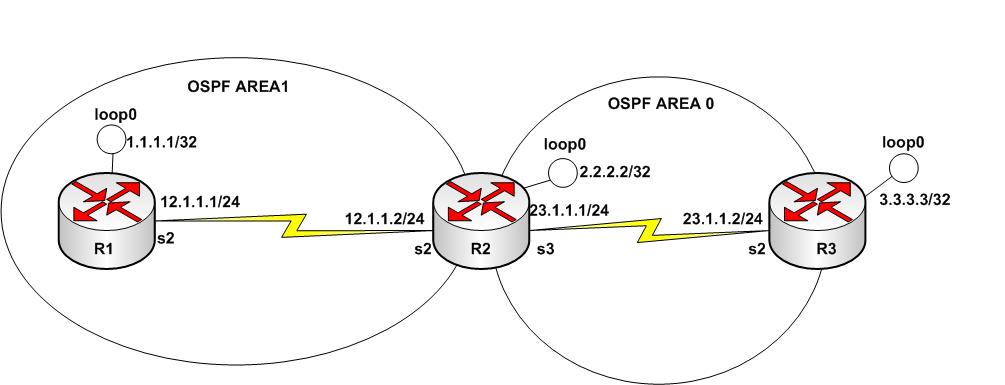
OSPF Database Summary. (Problem #72)


Consider the network shown above with the configuration on the three
routers as follows -

Router R1

interface Loopback0
ip address 1.1.1.1 255.255.255.255
!
interface Serial2
ip address 12.1.1.1 255.255.255.0
!
router ospf 100
router-id 1.1.1.1
log-adjacency-changes
network 1.1.1.1 0.0.0.0 area 1
network 12.1.1.0 0.0.0.255 area 1


Router R2

interface Loopback0
ip address 2.2.2.2 255.255.255.255
!
interface Serial2
ip address 12.1.1.2 255.255.255.0
!
router ospf 100
router-id 2.2.2.2
log-adjacency-changes
network 2.2.2.2 0.0.0.0 area 0
network 12.1.1.0 0.0.0.255 area 1
network 23.1.1.0 0.0.0.255 area 0


Router R3

interface Loopback0
ip address 3.3.3.3 255.255.255.255
!
interface Serial2
ip address 23.1.1.2 255.255.255.0
!
router ospf 100
router-id 3.3.3.3
log-adjacency-changes
redistribute connected subnets
network 23.1.1.0 0.0.0.255 area 0


Now consider the following output from the show ip ospf database database-summary command taken on router R1. The first command was issued with the configuration shown above and the subsequent outputs were taken after some configuration changes on the routers in the network which are not specified in this problem.

Output #1

R1#sh ip ospf database database-summary

OSPF Router with ID (1.1.1.1) (Process ID 100)

Area 1 database summary
LSA Type Count Delete Maxage
Router 2 0 0
Network 0 0 0
Summary Net 2 0 0
Summary ASBR 1 0 0
Type-7 Ext 0 0 0
Prefixes redistributed in Type-7 0
Opaque Link 0 0 0
Opaque Area 0 0 0
Subtotal 5 0 0

Process 100 database summary
LSA Type Count Delete Maxage
Router 2 0 0
Network 0 0 0
Summary Net 2 0 0
Summary ASBR 1 0 0
Type-7 Ext 0 0 0
Opaque Link 0 0 0
Opaque Area 0 0 0
Type-5 Ext 1 0 0
Prefixes redistributed in Type-5 0
Opaque AS 0 0 0
Total 6 0 0
R1#


Output #2

R1#sh ip ospf database database-summary

OSPF Router with ID (1.1.1.1) (Process ID 100)

Area 1 database summary
LSA Type Count Delete Maxage
Router 2 0 0
Network 0 0 0
Summary Net 1 0 0
Summary ASBR 0 0 0
Type-7 Ext 0 0 0
Prefixes redistributed in Type-7 0
Opaque Link 0 0 0
Opaque Area 0 0 0
Subtotal 3 0 0

Process 100 database summary
LSA Type Count Delete Maxage
Router 2 0 0
Network 0 0 0
Summary Net 1 0 0
Summary ASBR 0 0 0
Type-7 Ext 0 0 0
Opaque Link 0 0 0
Opaque Area 0 0 0
Type-5 Ext 0 0 0
Prefixes redistributed in Type-5 0
Opaque AS 0 0 0
Total 3 0 0
R1#


Output #3

R1#sh ip ospf database database-summary

OSPF Router with ID (1.1.1.1) (Process ID 100)

Area 1 database summary
LSA Type Count Delete Maxage
Router 2 0 0
Network 0 0 0
Summary Net 3 0 0
Summary ASBR 0 0 0
Type-7 Ext 0 0 0
Prefixes redistributed in Type-7 0
Opaque Link 0 0 0
Opaque Area 0 0 0
Subtotal 5 0 0

Process 100 database summary
LSA Type Count Delete Maxage
Router 2 0 0
Network 0 0 0
Summary Net 3 0 0
Summary ASBR 0 0 0
Type-7 Ext 0 0 0
Opaque Link 0 0 0
Opaque Area 0 0 0
Type-5 Ext 0 0 0
Prefixes redistributed in Type-5 0
Opaque AS 0 0 0
Total 5 0 0
R1#


Your task in this problem is to look at the output and reverse engineer what config changes must have been done to cause the changes in the output shown above. Note that you have to specify what happened between output #1 and output #2 and then what happened between output #2 and output #3.

Monday, October 8, 2007

Cisco 11500 Series of Content Services Switches

Cisco 11500 Series of Content Services Switches - Cisco


CISCO1721


New / Used or Refurbished Cisco 11500 Products

The Cisco CSS 11500 Series Content Services Switch is a high-performance, high-availability modular architecture for Web infrastructures. As the premiere switch for the Cisco Web Network Services Software, the Cisco CSS 11500 Series helps businesses to build global Web networks optimized for content delivery and e-commerce. By activating HTTP headers, the CSS 11500 Series helps to ensure availability, optimize utilization, reduce latency, increase scalability, and enhance security for Websites, server farms, cache clusters, and firewall systems.


Toplist